


ThriftAI: Profit Identifier
4.7523.00 Reviews
App Specs
- Version
- 1.0.77
- Updated On
- License
- Free
- Downloads
- 100,000+
- Developer
- smallstack ApS
- Categories
- Shopping
- Platform
- Android
Screenshots
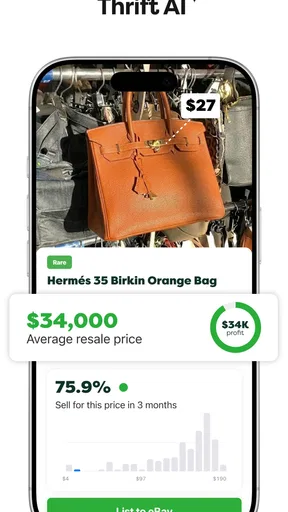
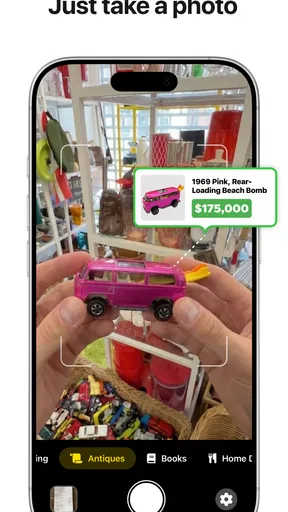
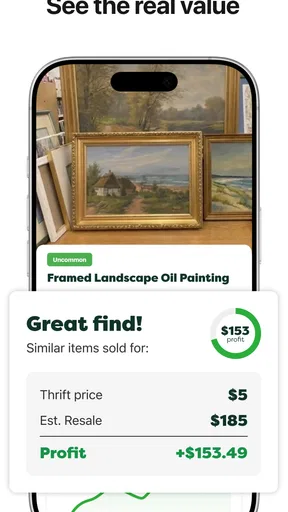
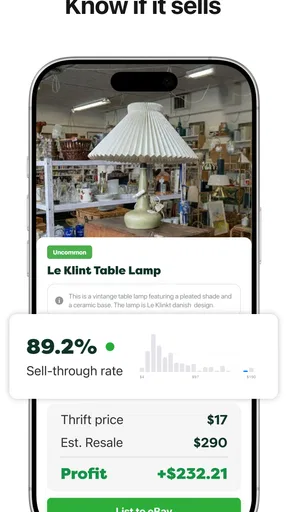
 Analysis by AppCompare
When I’m browsing a second-hand shop, the tricky part is often deciding whether an unfamiliar object is worth a closer look before another shopper picks it up. ThriftAI: Profit Identifier is built around that moment: it helps turn a quick scan into a more informed buying decision. I see it as a practical companion for people who enjoy hunting for bargains, not a guarantee that every promising find will become profitable.
Fast answers, with a pause for judgement
The appeal is speed: rather than stopping to search for every item manually, you can use a phone camera to get an initial sense of its resale potential. In a busy shop, that can help me decide what deserves more attention. I would still treat the result as a starting point, though. A suggested price cannot settle whether the item is in good condition, whether a particular color or size is desirable, or how much work it may take to sell.
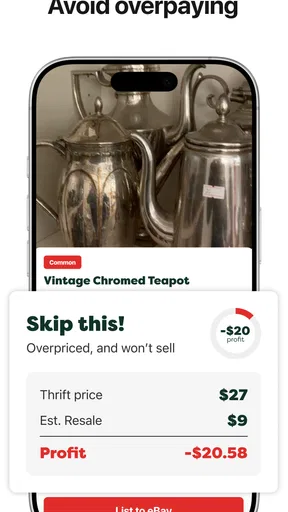
That distinction matters because a resale estimate is not the same thing as money in your pocket. Before buying, I’d compare the likely selling price with the asking price and leave room for cleaning, repairs, packing, and the time spent finding a buyer. If those costs make the deal look marginal, passing is a sensible outcome, not a failure of the app.
Making a scan useful in a real shopping trip
Picture a Saturday visit to a charity shop: I spot a small decorative object with a maker’s mark I don’t recognize, while other shoppers are moving through the same shelf. A scan can give me a quick lead about what the item might be and whether similar pieces attract interest. I can then inspect the mark and condition more carefully, take a note of the estimate, and decide whether the price leaves enough room for uncertainty.
For a less rushed workflow, I’d use the app in two passes. In the shop, scan only items that are unusual, clearly marked, or priced low enough to merit checking. Later, when I’m somewhere quieter, revisit the strongest candidates and research their exact model, condition, and likely selling costs. This keeps a busy browse from turning into a long phone session and helps prevent one exciting estimate from driving an impulsive purchase.
The same approach works at flea markets and garage sales, where descriptions can be brief and prices may be negotiable. A scan can give you a better question to ask—such as whether a label or model number is present—but I wouldn’t use an estimate as proof that an item is rare or authentic. For collectibles, branded goods, and anything with a condition-sensitive value, careful identification still matters.
Who benefits most, and when another method is better
I think the app makes the most sense for curious second-hand shoppers and new resellers who want a quicker way to screen possible purchases. It can also help experienced sellers move through a pile of mixed items and decide which ones deserve deeper research. Its value is strongest when you use it to narrow the field, rather than expecting a camera scan to replace your own knowledge of a niche.
Worth Reading Before You Choose

EA SPORTS FC Mobile 26 Is a Bigger Football Game, but It Takes Time

Flipboard Shows What News Apps Must Do Beyond the Feed

Switching to Android Auto Means Rethinking Your Driving Routine

Google Calendar Makes a Crowded Week Easier to Manage

Ludo King Makes the Most of the Minutes Between Plans

Baby Panda World Brings Quick Play to Modern Phones, but Its Game Library Feels Busy
If you already know the exact brand and model, a direct search on the marketplace where you plan to sell may be more useful. You can look for comparable items and pay attention to whether listings appear to have sold, rather than relying only on asking prices. For an item whose worth depends on authenticity, provenance, or subtle condition details, a specialist’s opinion is a better safeguard than any quick scan.
There is also a trade-off between speed and context. A camera-based result may be convenient when an item has a recognizable shape or label, but visually similar objects can differ in age, materials, and desirability. I’d improve the odds by getting a clear view of the whole item and any visible identifying details, then treating a broad match as a prompt to investigate, not a final identification.
Busy sessions, reliability, and practical limits
Scanning several candidates in a row is where convenience matters most. If I’m checking a crowded shelf, I want the process to stay simple enough that I can keep browsing rather than repeatedly changing how I handle the phone. The app’s core idea suits quick checks, but the result is only useful if I can make the scan under the conditions in front of me. Dim light, glare, cluttered backgrounds, or a partly hidden label can make visual identification harder, so I’d move an item to a clearer spot when that is appropriate and allowed.
I would not plan a purchase around the assumption that every scan will be instant or conclusive. A slower result is a reason to pause, not to guess at the item’s value. If the shop is busy, I can set the item aside, continue browsing, and return to it rather than holding up an aisle while I troubleshoot. That small change in workflow makes the tool more useful and keeps the shopping experience pleasant.
For reliability, I’d compare the app’s suggestion with visible clues: labels, maker’s marks, wear, missing parts, and the difference between a complete item and a damaged one. When the estimate seems surprisingly high, that is exactly when I’d verify the match more carefully. A price indication can help identify a lead, but it cannot inspect hidden damage or confirm that a listing is truly comparable to the item in my hand.
Device fit and what to expect from the app
ThriftAI is a free shopping app from smallstack ApS. It has a 4.6 average from around 7,800 ratings, and it has passed 100,000 installs. It is rated for Everyone, with a minimum operating-system requirement of version 8.0. The release date is May 30, 2025, and version 1.0.59 is the current version. Those details make it straightforward to assess basic compatibility, but they do not tell me how the app will feel on every individual phone; camera quality, available storage, and the device’s general condition can all affect day-to-day use.
It costs nothing to install, which makes a few cautious test scans an easy way to see whether the results fit your shopping habits. There are also in-app purchases, priced from $9.99 to $199.99 per item, so I’d check what a purchase covers and whether it suits the way I plan to use the app before paying. A casual shopper may be perfectly happy using the free option, while someone who relies on repeated research should decide whether any paid offering solves a real problem for them.
Compared with the usual alternative—searching the web or a resale marketplace by hand—this app puts a camera-led check closer to the moment of discovery. That is its clearest practical advantage. Manual searching gives me more control over the exact words and comparisons I use, but it takes longer and can be awkward when I don’t know what an object is called. I’d use the scan to get oriented, then switch to targeted research for any purchase where the potential return matters.
One useful habit is to record the reason an item caught your attention, not just the estimate: a label, a distinctive feature, or a condition detail. That gives you something concrete to verify later and makes it easier to spot when a suggested match is only superficially similar. Another is to set a personal spending limit before browsing. It keeps an exciting result from turning into an unplanned purchase, especially when you are still learning which categories you understand well.
Your Personal Thrift Guide
ThriftAI: Profit Identifier is like having a seasoned thrifter by your side, whispering all the secrets of the trade. The app’s goal is to help you identify potential profit from second-hand items by providing real-time market value estimates. It’s designed for both casual shoppers and those who like to flip items for a profit.
Getting Started
First things first, downloading the app was a breeze. It's available on both Android and iOS, so no one misses out. Upon opening it, you’re greeted with a clean, intuitive interface that doesn’t overwhelm you with options. I appreciate that because nobody wants to fiddle with a complicated app while trying to snag a deal before someone else does.
The setup process is straightforward. You can either create a new account or log in using your social media credentials. Once you’re in, the app offers a brief tutorial, which I found helpful, especially if you’re new to using AI-powered tools.
Features that Shine
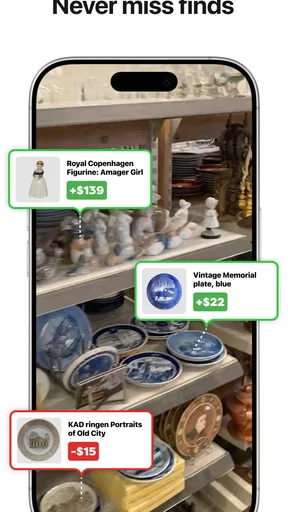
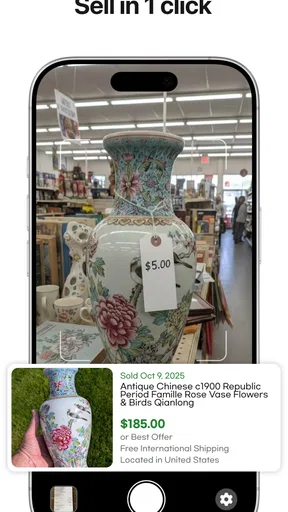
Now, let’s dive into what makes this app a thrifter’s best friend. The main feature is the ability to scan items using your phone’s camera. Just point, snap, and let the app work its magic. It quickly analyzes the item, scours online marketplaces, and provides you with a suggested resale price. This is perfect for those moments when you’re unsure if something’s worth the investment.
Another feature I love is the comparison tool. The app shows you similar items currently listed online, giving you a sense of the competition and potential profit margin. Plus, it’s not just limited to thrift stores. You can use it at garage sales, flea markets, and even your grandma’s attic!
What I Really Liked
One thing that stood out to me was the app’s ability to identify rare or unique items. Sometimes, you come across something that looks interesting but have no idea if it’s valuable. With ThriftAI, I was able to learn about the history and demand for some pretty obscure finds, which is both educational and potentially profitable.
Also, the app updates its database regularly, ensuring that the information it provides is as current as possible. This is crucial in the fast-moving world of online selling, where prices can fluctuate rapidly.
A Couple of Hiccups
No app is perfect, and I did encounter a few minor hiccups. Sometimes, the scanning feature took a little longer to process, especially in low-light conditions. But honestly, it’s a small price to pay considering the potential benefits.
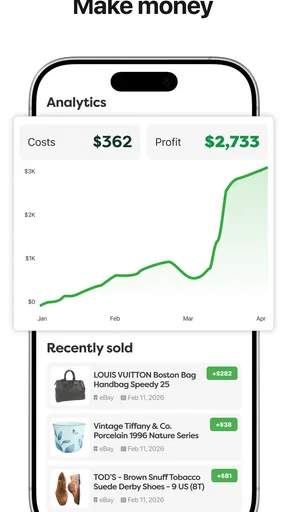
Additionally, while the app is free to download, there are premium features available that come with a subscription. These include advanced analytics and the ability to track multiple items simultaneously. Depending on your level of thrift enthusiasm, this might be worth the investment.
Final Thoughts
Overall, I found ThriftAI: Profit Identifier to be a fantastic tool for anyone interested in thrift shopping, whether for fun or profit. Its user-friendly interface, accurate pricing suggestions, and educational insights make it a valuable companion on any treasure hunt.
If you’re looking to take your thrift game to the next level, I’d definitely recommend giving it a try. Who knows, you might just find your next big score with a little help from AI!
My performance verdict
For me, the app is best understood as a quick filter between spotting an item and deciding whether it deserves proper research. It can save effort when the object is distinctive and the scan has enough visual information to work with. It is less persuasive when a purchase depends on exact condition, authenticity, or a narrow collector market. In those cases, I’d treat the estimate as a lead and do the slower checks before spending.
I’d recommend trying it if you enjoy second-hand shopping and want a convenient way to investigate unfamiliar finds, especially when you are learning how resale prices are formed. I would skip it if you expect guaranteed valuations, buy only items you already know in detail, or need a specialist assessment before committing money. Used with sensible limits, it adds a useful first look without taking the final decision away from you.
Pros
- Accurate profit calculations for sellers.
- User-friendly interface with easy navigation.
- Integrates smoothly with popular platforms.
- Real-time alerts for market trends.
- Customizable settings for personalized insights.
Cons
- Limited free features; premium required.
- Occasional lag in data updates.
- Steep learning curve for beginners.
- Requires stable internet connection.
- Limited customer support options.
FAQs for ThriftAI: Profit Identifier
What is ThriftAI: Profit Identifier and how does it work?
ThriftAI: Profit Identifier is an app designed to help users identify potential profits from thrift store finds. It uses advanced AI algorithms to analyze the item’s resale value based on current market trends. Simply take a photo of your thrifted item, and the app provides an estimated resale value, making it easier to decide if a purchase is worth it.
Is ThriftAI: Profit Identifier compatible with all mobile devices?
ThriftAI: Profit Identifier is available for both Android and iOS devices. To ensure compatibility, your device should be running at least Android 8.0 or iOS 12.0. It's recommended to keep your device updated to the latest operating system version to enjoy optimal performance and access to all features.
Does ThriftAI: Profit Identifier require an internet connection to function?
Yes, ThriftAI: Profit Identifier requires an active internet connection to fetch real-time data and analyze market trends for accurate profit estimation. The app needs to connect to its database and AI servers to provide the most up-to-date and precise information about your thrift finds.
Are there any in-app purchases or subscription fees?
ThriftAI: Profit Identifier offers a free version with basic features to get you started. However, for more advanced features and unlimited item scans, there is a premium subscription option. This subscription unlocks additional functionalities and provides a more comprehensive experience for avid thrifters.
How accurate are the profit estimations provided by ThriftAI?
The profit estimations in ThriftAI are based on AI-driven analysis and real-time market data. While the app strives for accuracy, market conditions can fluctuate, and resale values may vary. It’s a valuable tool for guidance, but users should consider other factors and personal judgment when finalizing purchasing decisions.


